Consumer apps can afford simplicity. They often do one thing well, with limited customization, serving users with similar needs.
B2B software doesn’t have that luxury. Your product might serve administrators and end users, experts and beginners, multiple industries with different workflows. The features exist because customers need them. The complexity is real.
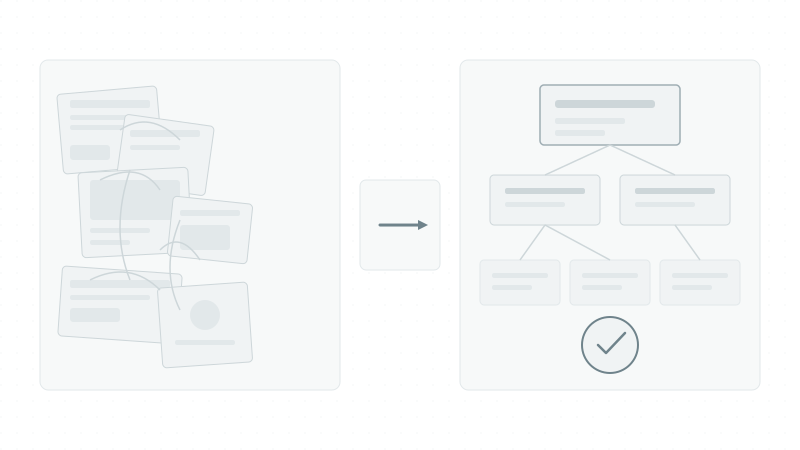
The design challenge isn’t eliminating complexity—it’s organizing it so users can find and use what they need without being overwhelmed by what they don’t.
Progressive Disclosure
Not everything needs to be visible all the time. Progressive disclosure surfaces information and options when they become relevant, keeping interfaces focused while maintaining access to advanced capabilities.
This appears in many forms:
- Default states that work for common cases, with options to customize
- Advanced settings behind expandable sections or secondary screens
- Contextual tools that appear based on what the user is working on
- Smart defaults that reduce the number of decisions required
The key is understanding your users’ mental models. What do they need immediately? What can wait until they’re ready for it?
Consistent Patterns
Consistency reduces cognitive load. When users learn a pattern once, they can apply it everywhere that pattern appears.
This means:
- Similar actions should look and work the same way across features
- Navigation should be predictable
- Terminology should be uniform
- Visual hierarchy should follow consistent rules
Breaking consistency should be intentional and rare, reserved for cases where the established pattern genuinely doesn’t fit.
Clear Information Architecture
Complex products need thoughtful organization. Users should be able to answer these questions quickly:
- Where am I?
- Where can I go from here?
- Where is the thing I’m looking for?
This requires understanding how your users think about their work. Their mental model might not match your product’s structure. Research—card sorting, tree testing, user interviews—reveals how people actually categorize and seek information.
Workflow-Oriented Design
B2B users are usually trying to accomplish specific tasks. Design should support those tasks directly:
- Identify the core workflows that define your product’s value
- Reduce the steps required to complete those workflows
- Eliminate decisions that don’t need to be made
- Provide clear paths from start to completion
This might mean different experiences for different user types. An administrator setting up the system has different needs than an end user performing daily tasks.
The Continuous Challenge
Complexity management isn’t a one-time project. Every new feature adds potential complexity. Every edge case addressed adds options to consider.
Sustainable approaches include:
- Regular audit of feature usage to identify candidates for simplification or removal
- User testing with both new and experienced users to catch usability issues early
- Design system maintenance to keep patterns consistent as the product evolves
- Documentation and training to help users discover capabilities at their own pace
The goal isn’t a simple product. The goal is a product that feels manageable despite its depth—powerful tools that users can learn progressively and use confidently.